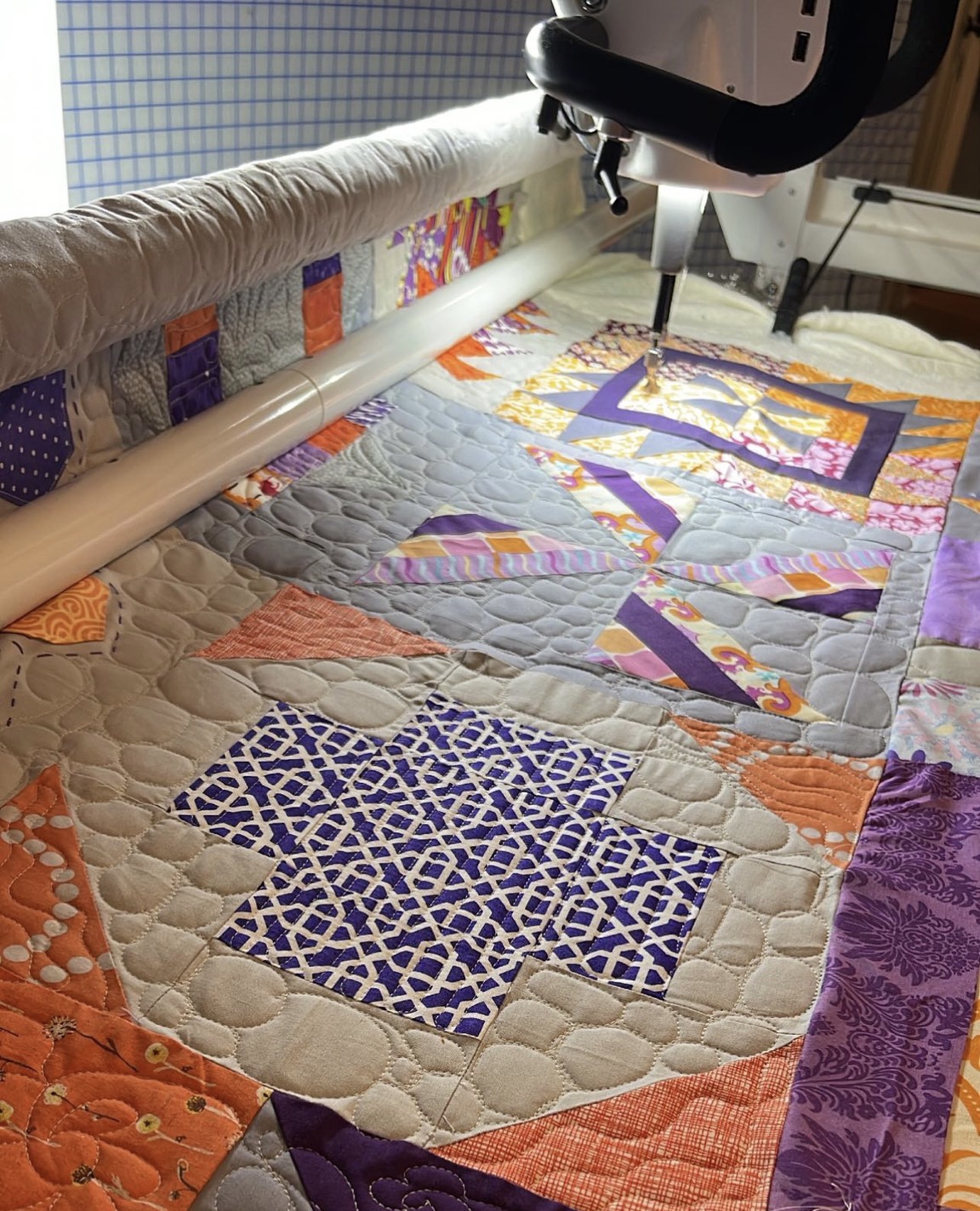
Two big takeaways that I learned:
- 10 feet with 2 foot allowance around is a lot bigger than I could actually visualize, even while marking it out with a tape measure
- long arm machines are VERRRRRRY picky about their threads and their tension.
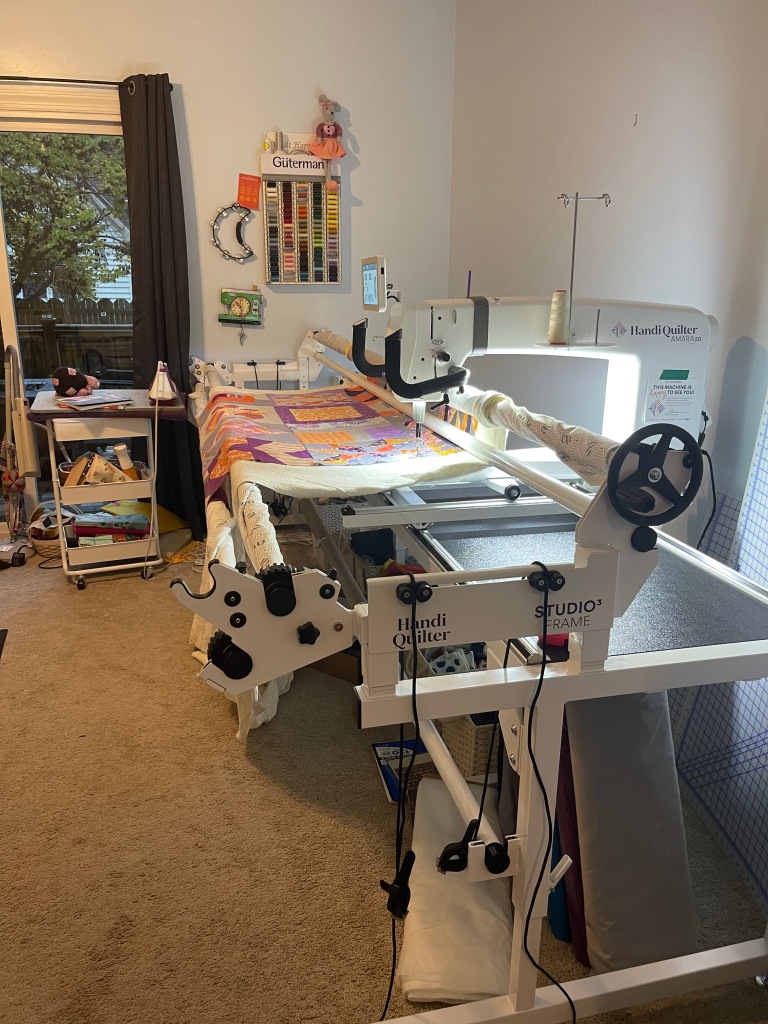
It’s still quite a mess in there, but I thought since I wouldn’t be quilting from the back (where paper pantagraphs are used) at this time that I could scoot it back to the wall. I also thought the space around the machine was a suggestion, and thatI knew better than the manufacturers on how much space would actually be needed for me. Turns out, the space around the machine is actually very necessary and you do need it. Thankfully it fits right on the wall that I had planned (granted it sticks out into the doorway a little but it is an oversized doorway so it works. Not ideal, but works) And to think I first thought it would be possible to fit a 12 foot frame in there. I also thought I would be able to have two bookcases on either end of the machine. Also no, as again, the manufacturer actually knew what they were talking about and the machine turns out in does indeed need all that space. So now I’ll need to purge and organize some more as this room in addition to quilt studio is also home gym and guest bedroom. It’s doable, but extra stuff and clutter will have to go!
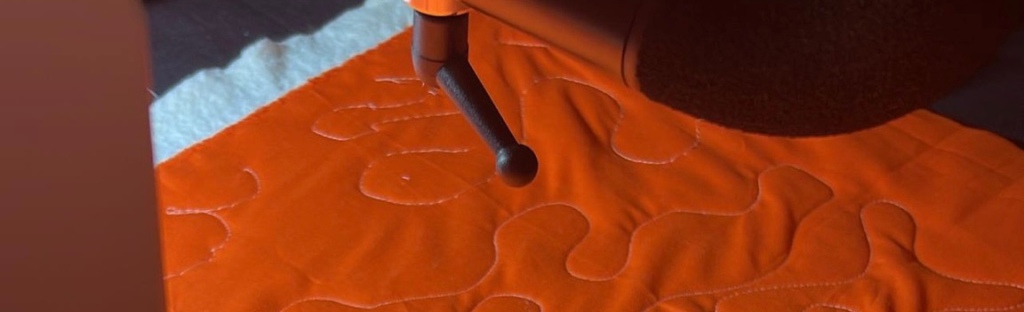
Now onto themore important learning curve of the tension issues. I can be pretty careless with threads and tensions on my domestic machine. I can use pretty much whatever needle and I can use a different thread in the bobbin and the top without huge issue. The long arm (and from what I hear this is consistent across many companies) is PICKY. I thought I broke it at first. The first few stitches were UGLY. Eyelashes and flatlines all over. With my play and (more) research, I learned that I just needed to finagle the top thread tension to perfectly match the tension to the bobbin. The bobbin is tested by making sure that when held by the string it’ll stand up and move freely, but not a lot and not stuck. It’s one of those instinctual things where you just know if feels right. There are some fantastic you tube videos out there for bobbin tension. Once that’s all good, just tick by tick adjust the top until your test fabric has zero eyelashes or flatlines and your top and bottom have equally beautiful stitches (it also helps if you remember to plug in the stitch regulator……..speaking from experience…)
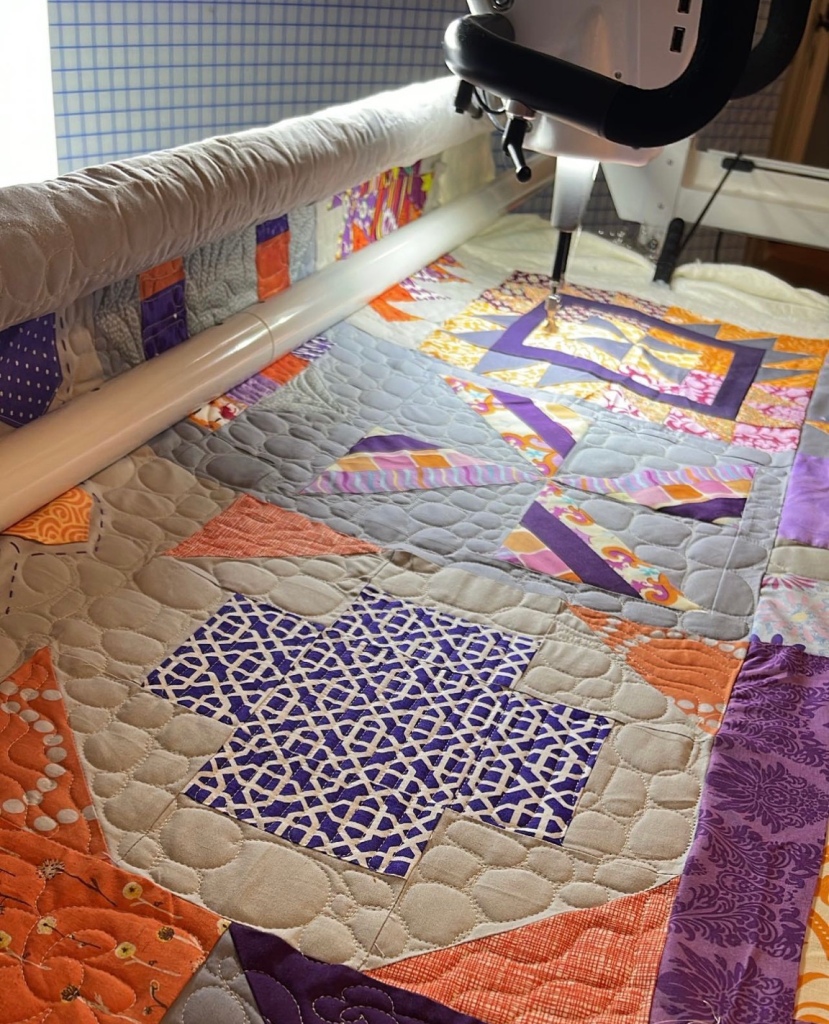
With trial and error, patience, social media and a whole lot of you tube it is so possible to learn way more about tension balancing on a long arm than you ever thought you would learn and be free motion quilting up a storm!!!
Leave a Reply